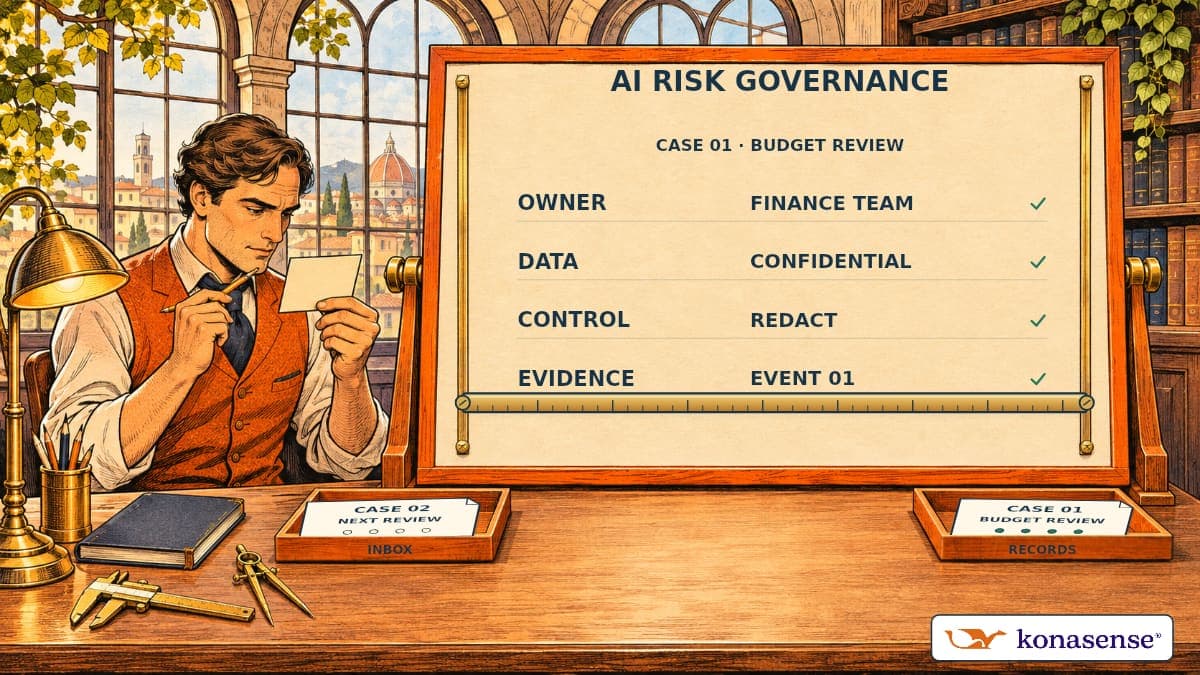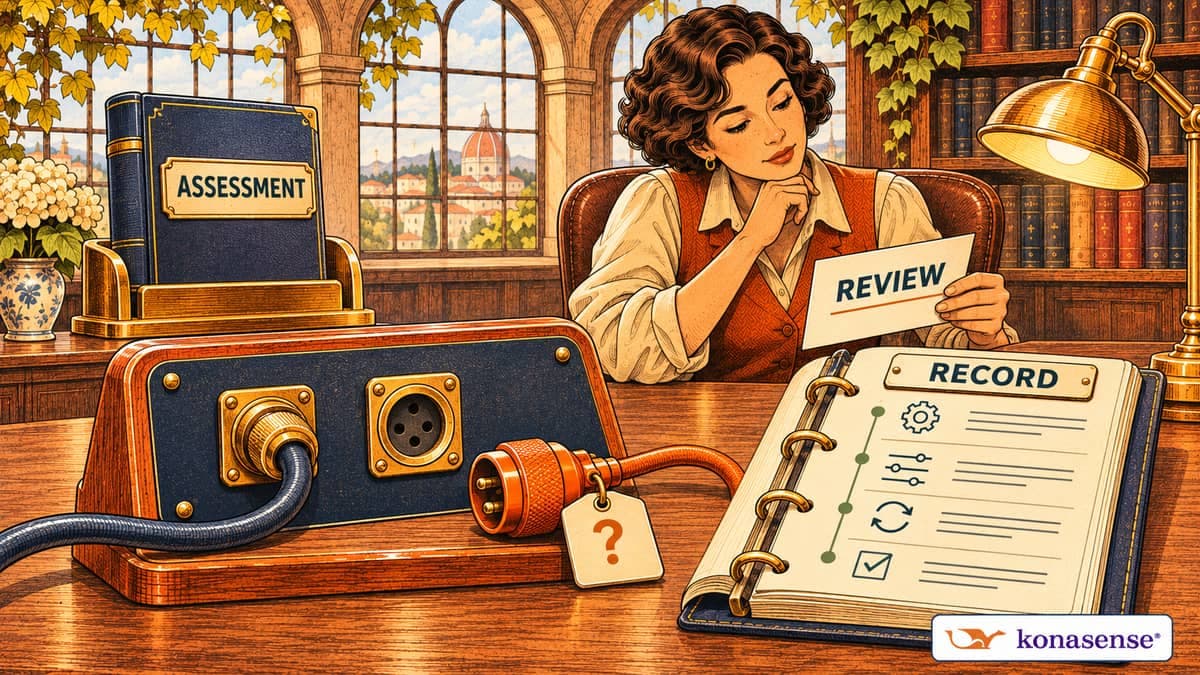
An approved AI use can change without a new name or model. A team adds a data source, expands the audience, or enables an action, and the original assessment no longer describes the whole operation. Keeping a history of those changes lets the next reviewer see what was approved, what was added, and which decision applies now.
The Brazilian initiative supports continuing review
On November 18, 2026, Brazil's Ministry of Communications reported the availability of the online ethical AI impact self-assessment, AIE, for public bodies in SISP, Brazil's System for the Administration of Information Technology Resources. The Ministry of Management and Innovation had announced the web version on November 12 and described support for an ongoing improvement cycle.
The initiative is directed at the public sector; that announcement does not impose a new requirement on private companies. It offers a useful starting point for a management question: how does a company keep an assessment connected to later changes in use? The change record below is our recommendation, not a description of an AIE feature.
Keep the approved scope and the requested change separate
Consider a hypothetical procurement assistant approved to summarize documents in an internal contract library. Only the procurement team can use its summaries, and the assistant cannot send messages. Later, the team asks to connect a supplier mailbox so the assistant can prepare replies to incoming offers.
The new request changes the source of information and the work the assistant performs. It may also introduce personal information or confidential material that was outside the original library. Record those differences before deciding whether the previous assessment covers them. A familiar product name does not settle the question.
A short comparison can make the request reviewable. In this example, the expansion is still pending and only the original scope remains approved.
| Approved use | Requested change |
|---|---|
| Input: Internal contract library | Input: Supplier mailbox with incoming offers |
| Work performed: Summarize documents for procurement staff | Work performed: Prepare proposed replies to suppliers |
| External action: No message-sending capability | External action: No automated sending requested; a person would review and send |
| Decision status: Approved under the recorded conditions | Decision status: Pending review of the additional data and use |
Record the decision as part of the change history
The procurement owner should explain the business need. The data owner should identify what the mailbox contains and who may access it. The team responsible for the integration should state what access the connector would actually grant. The decision-maker can then approve a bounded expansion, request changes, or keep the original scope.
Suppose the expansion is approved only for a designated mailbox folder and draft replies that remain inside the procurement workspace. The record should identify those conditions, the decision date, the responsible owner, and the material used to reach the decision. A subsequent request to send replies automatically is another change; it does not inherit approval merely because drafting was allowed.
Preserve the relationship between each request, the corresponding decision, and the configuration used in operation. Replacing the old assessment with the latest file would make it harder to determine which conditions applied to an earlier event. The broader AI governance model connects these decisions to organizational responsibilities.
Reconcile what was requested with what is running
A change record is incomplete if it stops at approval. Link it to confirmation of what was deployed or enabled, including differences from the approved scope. An approved folder restriction and a connector that can read the whole mailbox are different facts. Until the difference is resolved, record it as an open issue rather than treating the approval as proof of the operating state.
The AI agent audit-trail guide explains how records can support reconstruction without claiming more than they establish. Keep references to relevant configuration, access and activity records; avoid copying full messages into the assessment history when a limited record answers the review question. Access and retention should reflect the sensitivity and purpose of that evidence.
Changes can also arrive outside the planned process: an administrator grants broader access, a team begins using the assistant for another purpose, or an incident exposes an assumption that was wrong. Identify who records the difference and who decides whether to restrict, suspend or reassess the affected use. A calendar reminder cannot substitute for that ownership.
Ask for the last change, not just the latest assessment
At the next governance review, choose one operating use and ask its owner to show the last material change. What did the earlier approval permit? What was requested? What decision was made, and what was actually enabled? Unresolved differences should have an owner and a defined next action.
This history gives management something specific to review when the business expands AI use. It also lets a later investigation interpret an action against the conditions in force at the time, rather than against a policy or assessment written afterward.