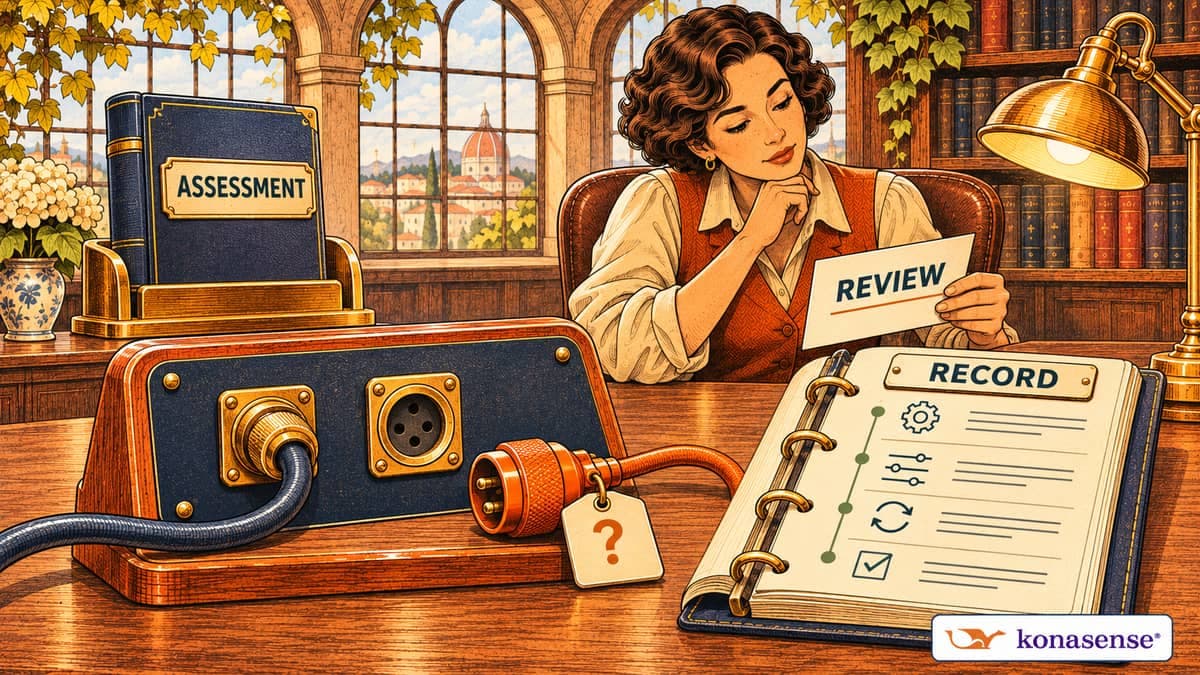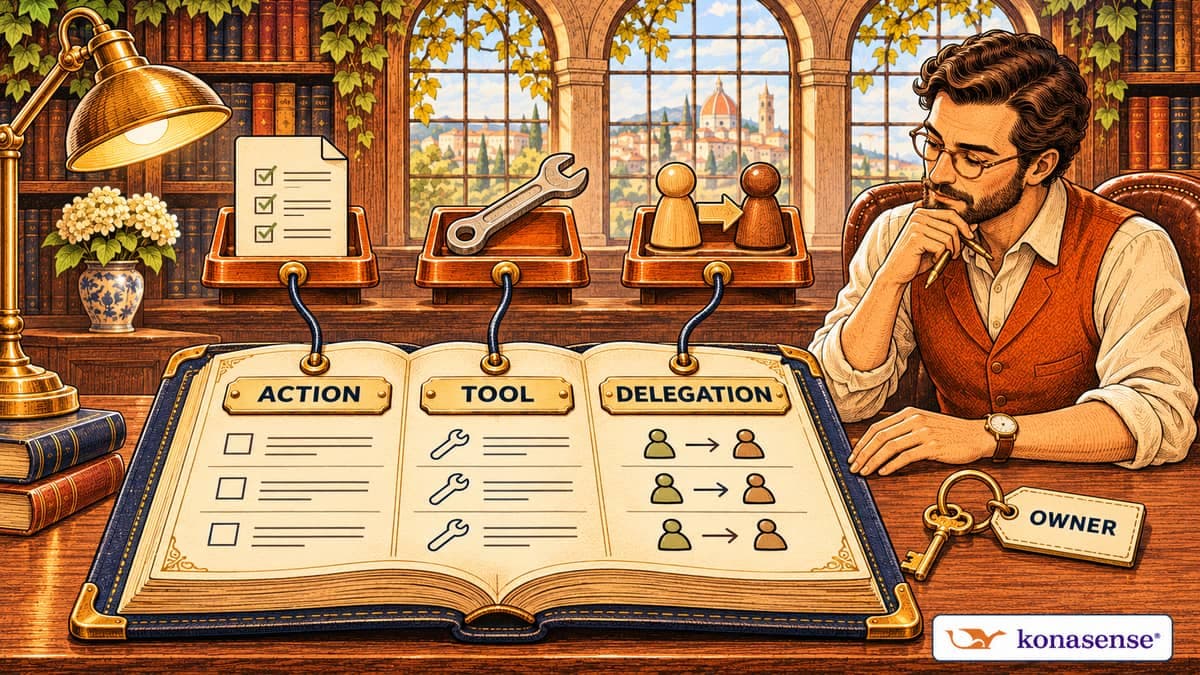
An AI agent risk register should explain how a business consequence could occur and whose authority makes the relevant action possible. The model name and a generic risk rating do not describe a tool that can change payment details or a delegated service with broader access than the original task requires. Those relationships belong in the risk record.
A draft taxonomy creates a useful review point
On November 9, 2026, NIST released the Initial Public Draft of SP 2400-102 E2026, updating its adversarial machine-learning taxonomy with a focus on agentic systems. Comments are due December 18, 2026. This is a draft for consultation, not a final standard or a certification of any product.
The structure below is our recommendation for reviewing an agent's authority, not a NIST-mandated template. It connects a business scenario to the operations and permissions that could produce it, so the owner can decide what access to change or which uncertainty to resolve.
Describe the action behind the loss
Consider a hypothetical finance agent authorized to reconcile supplier invoices. It delegates a lookup to a service connected to the accounting system. That service can read supplier records, but its credential also permits changes to payment details. The reconciliation task did not authorize those changes.
The risk record should describe the possible consequence: an unauthorized change to a supplier's payment destination could cause an otherwise valid payment to go to the wrong account. “Incorrect AI output” does not capture that path. The material operation is changing the payment record, and the relevant access belongs to the service that can make the change.
Keep the model inventory linked to this record, but do not use it as a substitute for the execution path. A model change may matter less to this scenario than a connector role change that introduces write access. Our AI agent governance overview explains why actions and permissions belong alongside the model in that scope.
Follow the identity that performs the delegated work
Record which participant receives the task, which data it receives, and which identity it uses to access the next system. Do not assume that restrictions in the original request are enforced by a downstream service. A limited task description cannot narrow a credential by itself.
In the example, finance owns the reconciliation process, while a platform team may manage the connector's permissions. The record needs both responsibilities: who decides whether payment details may change, and who can restrict the service's access. If the team cannot establish which identity performs a write, record that uncertainty rather than assuming the agent's permissions carry through.
Complete one risk record before expanding the inventory
This illustrative entry uses the hypothetical reconciliation scenario. It is a proposed review aid, not a scoring methodology or a compliance checklist. The proposed restrictions and checks are not controls verified in an actual deployment.
| Record | Illustrative entry |
|---|---|
| Consequence and owner | A supplier payment goes to an unauthorized account after a payment-record change. Treasury owns the payment decision. |
| Action, tool, and resource | The reconciliation service writes to a supplier's payment details through the accounting connector. |
| Delegation boundary | The agent may request a lookup. Changing payment details requires a separate authorized workflow. |
| Proposed control and evidence | Restrict the lookup service to read access. Check its effective permissions and attempt a prohibited update on a fictitious supplier record in an isolated test environment; examine the resulting state. |
| Review trigger | The connector's role changes, the agent receives a write-capable tool, or another service is added to the delegation path. |
The entry makes the next assignment concrete: the platform owner can examine the service credential, and the finance owner can confirm that reconciliation does not include payment-detail changes. The same division identifies who must revisit the risk if the business later asks the agent to perform that additional action.
Distinguish a setting from evidence that a restriction worked
A screenshot records what an interface displayed. By itself, it does not prove that the configuration was applied or that a later action complied with it. For this scenario, the assessment needs the executing identity, the applicable permissions, and the result of the attempted update. A denial message alone may leave the actual state unconfirmed.
Keep references to those records instead of copying every command or sensitive payload into the register. The agent audit-trail guide explains how to connect decisions and outcomes while preserving gaps in what can be established.
Use the review to choose a response: reduce access, change the delegation path, obtain missing evidence, or accept a bounded exposure with an accountable owner. A new risk label has value when it helps someone make that decision.