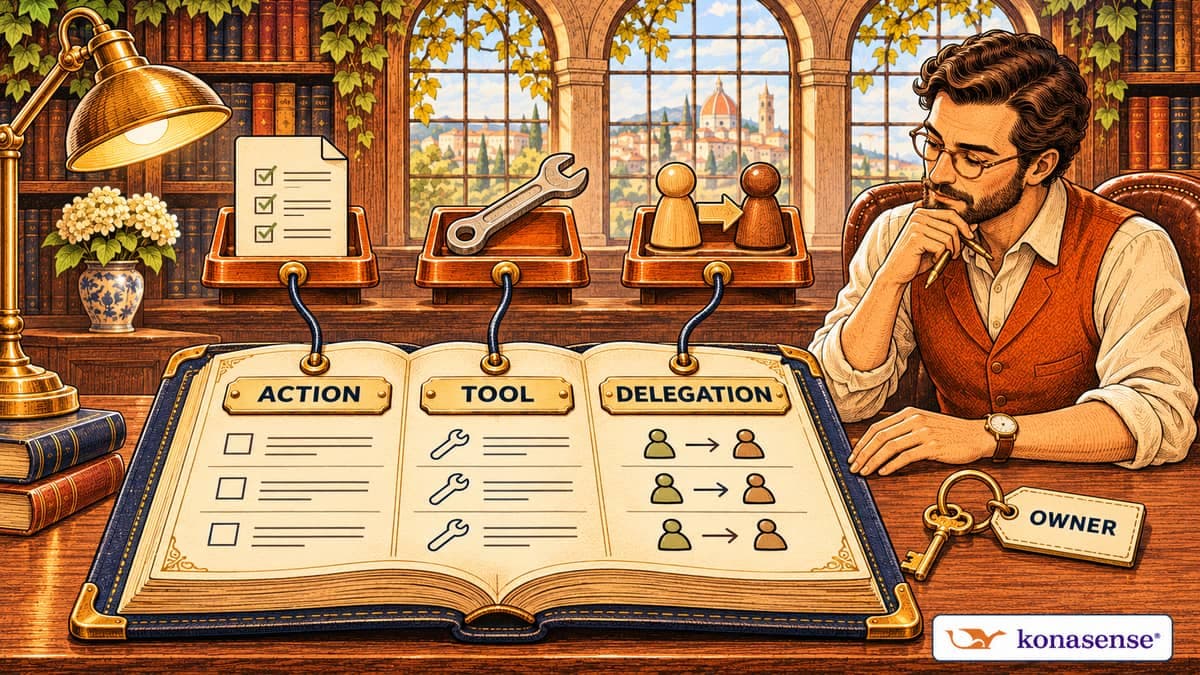
When an attack progresses faster than the response team can review each event, the company needs clear authority to contain it. Someone must be able to restrict access or interrupt a service under agreed conditions, with a defined scope and a way to assess the business impact. Elapsed time helps measure the response; the control is the action the team is authorized and able to take.
ARTEX brings the incident-response question into focus
On November 5, 2026, CERT-EU reported threat actors using ARTEX, an AI-assisted penetration-testing framework, during the preceding weeks. Its assessment of similar activity against its own constituency qualified ARTEX involvement as highly likely.
CERT-EU recommends reducing unnecessary internet exposure, prioritizing fixes for exposed assets, and monitoring privileged activity, among other measures. Our management recommendation is to examine who can authorize containment when that monitoring reveals a suspected compromise. The response may still limit damage after an initial intrusion. It should also account for the disruption that containment itself can cause.
Make the authority specific before the incident
Consider a hypothetical service account used by a supplier portal. The security team detects unusual activity involving that account, but the portal also handles legitimate supplier work. Suspending access could interrupt that work; leaving access unchanged while waiting for an executive could allow the suspected compromise to continue.
A useful response plan identifies the affected account and service, the evidence needed to act, and the person or role authorized to restrict access. It also identifies which decisions need the business owner's involvement. Permission to restrict one account should not silently become permission to shut down every connected service.
The business and security owners should agree on the acceptable scope of interruption and the escalation path when evidence is incomplete. A temporary restriction may be appropriate in some circumstances; in others, an interruption could create a greater immediate risk. That tradeoff needs a named decision-maker, including when the usual owner is unavailable.
Separate containment from the decision to restore service
Ending an alert is not the same as resolving a compromise. Record what was restricted, which activity the restriction was intended to stop, and what remains unexamined. The person authorizing restoration needs to know whether the affected access is trustworthy again and whether the conditions that enabled the incident have changed.
In the portal example, the incident record should distinguish a decision to suspend the account, confirmation that the restriction took effect, and the later decision to restore access. If the service was interrupted unnecessarily, that result should inform the next revision of the response plan. If suspicious activity continued through a different account, the initial containment should not be reported as a complete resolution.
Find where the response actually waited
Use an exercise with synthetic activity and an isolated test service to examine the handoffs. Reconstruct when the first relevant signal appeared, when the team had enough context to act, when containment was authorized, and when the restriction was confirmed. Include an unavailable owner and an uncertain signal.
Those intervals expose different problems. Waiting for reliable context calls for better detection or investigation. Waiting for authority calls for a decision about delegation. A restriction that was authorized but never applied points to an execution failure. One average response time can hide all three.
Set response objectives for the service and consequence at risk, rather than inventing one deadline for every incident. Keep the evidence needed to review the decision and the conditions for restoring service. The exercise should show whether the plan works when people or systems are unavailable, not just whether an alert reaches the right inbox.
Give defensive automation its own limits
If the company introduces AI agents into investigation or response, decide which tools they may use and which actions still require a person. An agent that summarizes an incident has different authority from one that can suspend accounts. Its permissions, action records, and failure behavior belong in the response design. Our AI agent security overview addresses that part of the organization's own environment.
The investment decision is whether the response team has enough context, authority, and tested means to contain a defined incident. Governance of the team's AI tools is one part of that decision; it does not replace the measures needed to defend the exposed service.