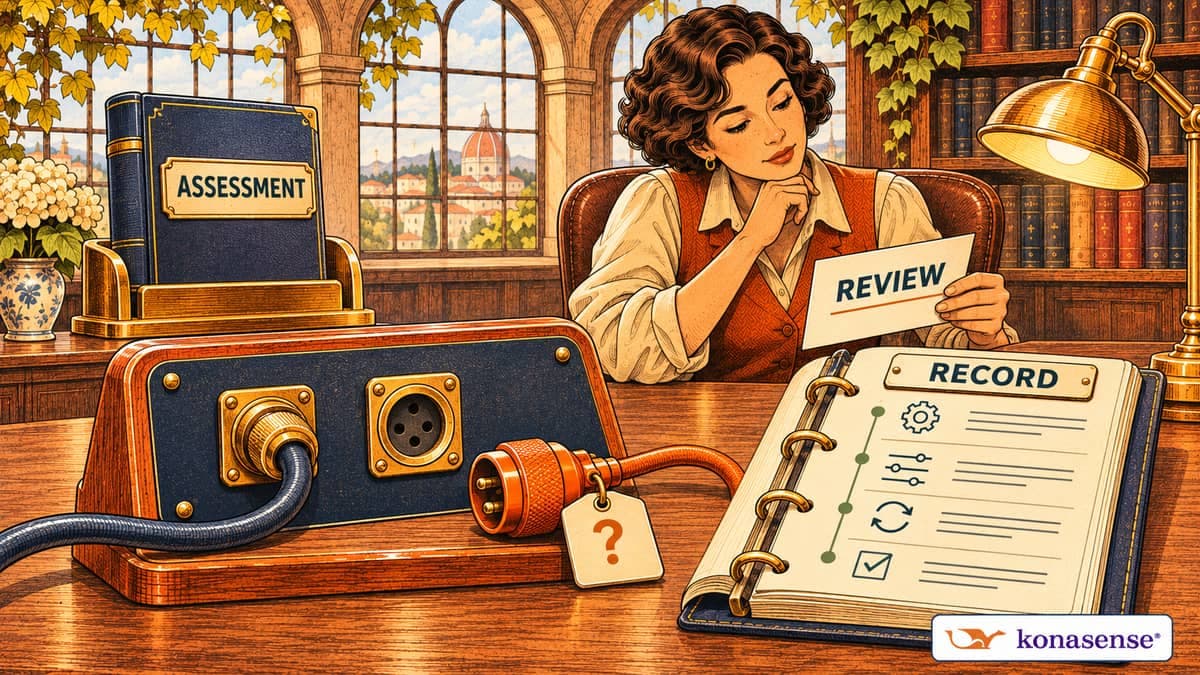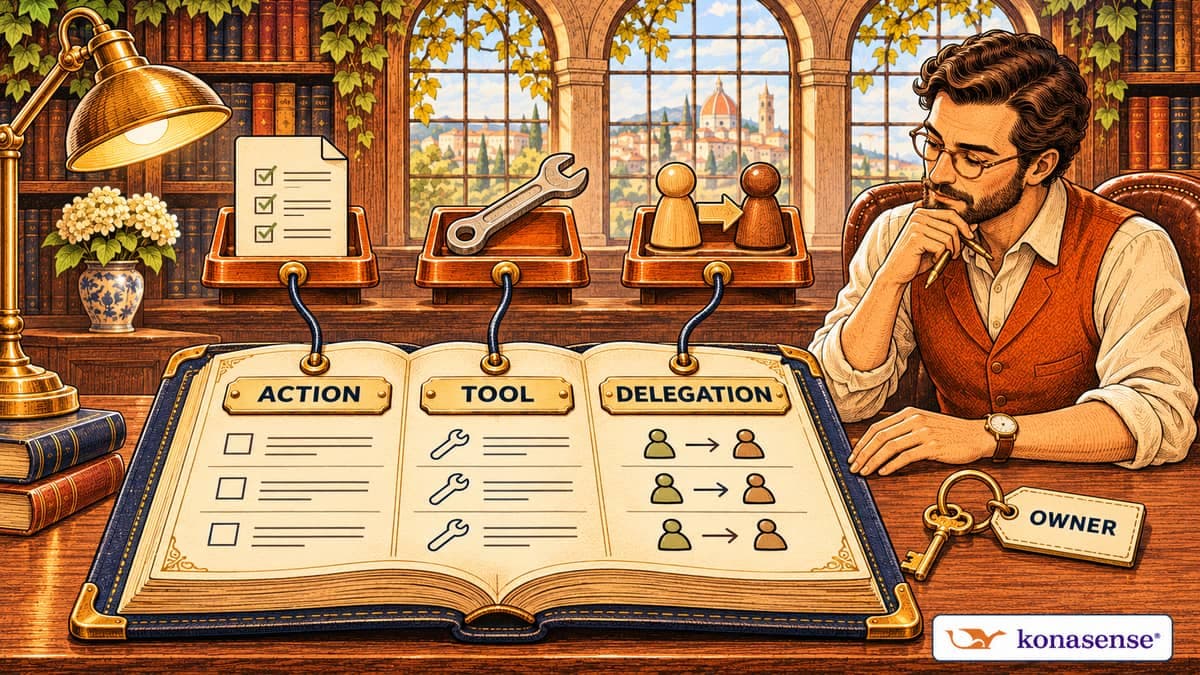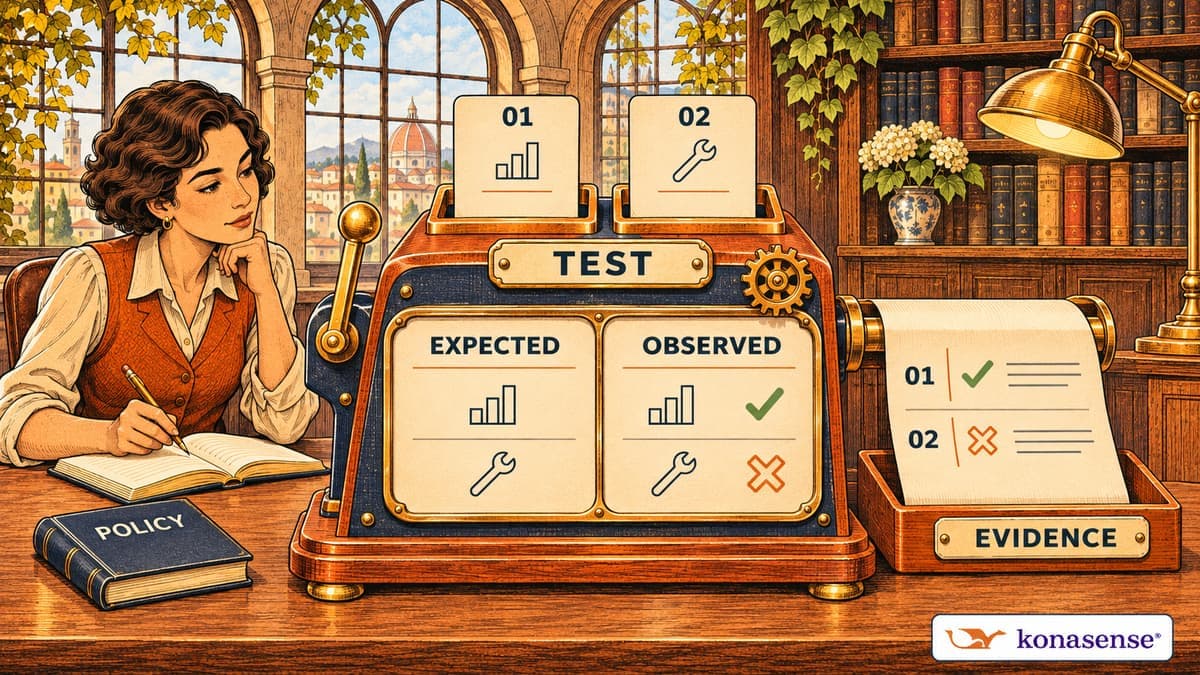
An AI governance commitment becomes useful when someone can test it, inspect the result, and decide what to change. A policy document establishes intent. A successful demonstration shows that something worked once. Neither, by itself, tells a board whether a particular control still works in the workflow the company has approved.
On October 9, 2026, Brazil's ANPD announced its second AI sandbox monitoring report, describing evidence collection, risk classification, mitigation, and retesting. This is a supervised pilot, not a new general obligation or a certification. The following approach is our recommendation for enterprise review, not an ANPD requirement.
Start with a statement that can fail a test
“We protect confidential information when employees use AI” is an objective. It leaves the test designer to guess what information, which application, whose account, and what protection means. A testable statement makes those choices explicit before anyone runs the demonstration.
Consider this hypothetical control: a finance analyst using a specified corporate AI application may summarize a sanitized expense report, but may not submit a report containing bank account details. Name the account configuration, input method, policy version, expected response, and person responsible for the result. If the application can be reached through several interfaces, identify which ones the test covers.
That precision gives the business a useful disagreement to resolve. Finance may require a workflow that Security cannot yet control on a particular surface. Recording that gap lets the owner narrow the use case or choose another safeguard. An unqualified statement that the application is “approved” hides the decision.
Test the allowed path as carefully as the prohibited one
A control that stops every task has not demonstrated that the approved workflow is usable. Pair the prohibited case with a legitimate one. Using synthetic records, check that the sanitized expense report can proceed and that the prohibited version receives the expected treatment. Keep the inputs and expected outcomes documented so a second reviewer can repeat the exercise.
Then vary a condition that matters: another supported input method, a different user role, or the absence of information required for the decision. Where a check is unavailable, record the limitation instead of treating an unobserved action as a pass.
Agree on failure handling before the test. Who can suspend the workflow? Who decides whether an exception is acceptable? What work can continue safely while the issue is investigated? The answer should belong to a named role, not to whoever happens to be watching the screen.
Keep a decision record, not a warehouse of sensitive content
A reviewer needs enough information to connect the control statement to the observed result. For the hypothetical finance test, that means a case identifier, the relevant configuration, expected and actual outcomes, the test date, and a reference to the evidence. It also needs an explanation of any difference between the two outcomes.
The record should distinguish a decision from its effect. A system saying “deny” is one observation; confirmation that the destination did not receive the submission is another. A test may need evidence from both sides. If the team can only establish the first fact, that is the scope of its conclusion.
Use synthetic data for repeatable tests where possible. In production reviews, define access, retention, and the minimum content required for the investigation. Collecting every prompt indefinitely can create another sensitive repository. Our guide to AI agent audit trails develops the distinction between a useful record and indiscriminate content capture.
Make the result expire when its assumptions change
A passed test belongs to a particular configuration. It should not silently become evidence for a new application version, a new integration, or a different class of data. Record which changes require retesting and assign someone to notice them.
The same principle applies when the business changes its workflow. A team that previously asked AI to draft an internal summary might later use it to send the summary to a customer. Even if the application and model remain unchanged, the permitted action and consequence have changed. The previous test does not answer the new question.
For each material change, decide whether to repeat an existing test, add a case, or withdraw approval for a particular use. Preserve earlier results as historical evidence. Replacing an old “passed” date with today's date without a new test makes the record less credible.
Deliver a test record the owner can act on
For the hypothetical finance workflow, finish with a completed test record. The following fields connect the control to a decision without treating an expected result as something already observed.
| Field | What to record |
|---|---|
| Expected result | The sanitized report may be submitted; the report containing bank account details may not. |
| Observed result | Whether each attempt proceeded, was prevented, or could not be verified. |
| Evidence | References to the test inputs, configuration and policy version, event record, and destination-side confirmation when available. |
| Decision | Continue within the tested scope, investigate a gap, or suspend this use. Record the responsible owner and the change that will require retesting. |
The business owner can use that record to decide whether the workflow should continue under the tested conditions. If the decision goes to the board, it arrives with a specific uncertainty and a proposed response. That is a concrete deliverable for AI governance, rather than another count of approved applications.
Bring one control to the conversation
Talk with KonaSense about a workflow, the boundary you need to govern, and the evidence you would expect from a demonstration.