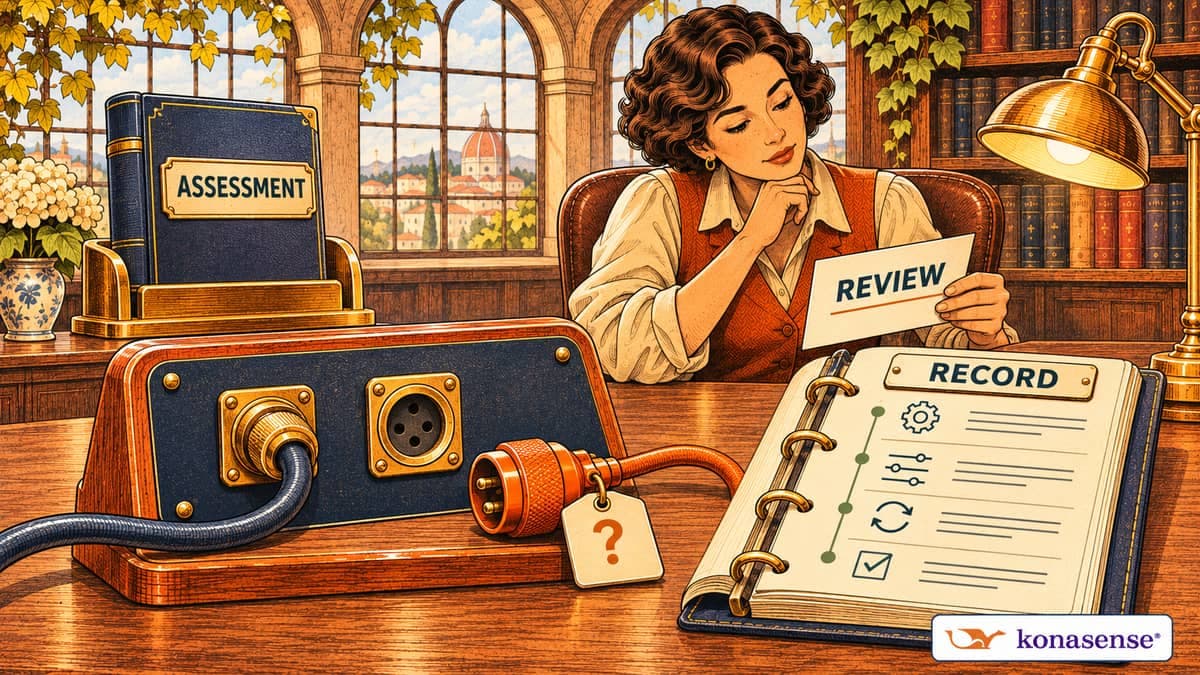
An employee should be able to use an AI policy to make a decision before sending data or acting on an answer. If the document says “use AI responsibly” but cannot resolve a routine task, the company has left the employee to interpret the risk without enough guidance.
On October 13, 2026, Chile's Suseso described its institutional generative AI policy, approved in September. It sets out permitted support tasks, human review, and restrictions on sensitive information. This is one institution's policy, not a regional rule or a Brazilian requirement. It offers a useful prompt for a management question: can our employees turn our own policy into an actual work decision?
Write rules around work, not just a list of applications
An approved application list answers where employees may begin. It does not settle what they may do there. Summarizing a public report and summarizing an employee's medical record are different decisions, even if the interface looks identical.
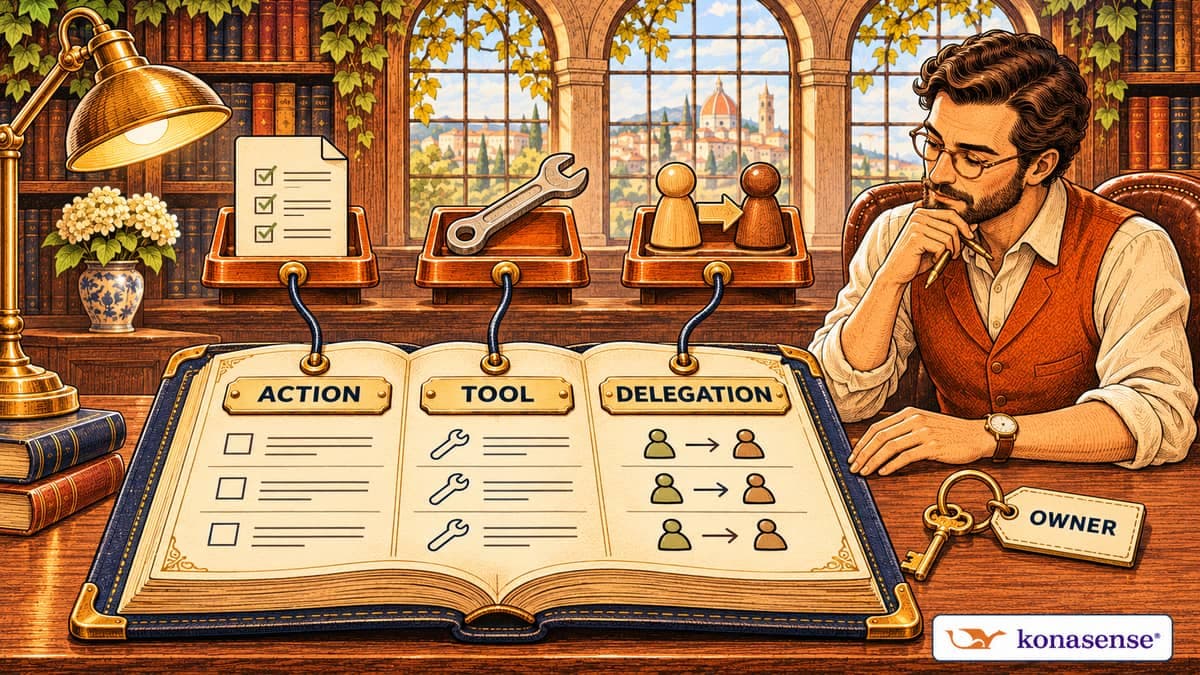
For each common workflow, describe the task, allowed data, required account or environment, expected review, and permitted destination for the result. This gives an employee a sequence they can follow without translating broad principles into a security architecture.
Consider a hypothetical customer-service team preparing a response. A useful rule might permit drafting from an approved public knowledge base, require a person to verify the answer, and reserve sending the response for that person. It should separately explain whether customer-specific information may be entered. The employee should not have to infer that permission from the fact that drafting is allowed.
Explain the data boundary in the language of the job
“Do not share confidential data” is difficult to apply if employees cannot recognize it in their normal materials. Give examples appropriate to the job: a support conversation, an unreleased commercial proposal, a personnel spreadsheet, or an internal system screenshot. Explain which elements change the decision and where to ask when the classification is unclear.
Keep the examples synthetic. A training document does not need a real customer's data to illustrate a prohibited input. Nor should an employee have to submit the sensitive material to an unapproved AI tool to discover whether the rule applies.
Separate permission for the application from permission for the data. Approval might depend on the account, contractual arrangement, or configured environment. The policy should identify the approved route in terms employees can recognize and give them a safe alternative if it is unavailable. That is the practical connection between a written policy and AI usage governance.
Give the reviewer something specific to check
“A human must review the result” assigns an activity without defining a standard. For the hypothetical customer-service response, the reviewer should check whether the answer matches the source material, whether it exposes information to the wrong recipient, and whether it makes a commitment the company has not authorized.
Different outputs need different reviewers. A language editor can improve a financial explanation without being authorized to validate the calculation or approve a refund. Name the decision that requires expertise or authority, then assign the role. Do not assume that the employee who requested the output can approve every consequence.
Also define what happens when the review finds uncertainty. The employee may need to return to the source, request specialist input, or stop the task. A review requirement that offers only “approve” can become a formality.
Make exceptions usable and accountable
A policy needs a route for work that does not fit its examples. State who receives the question, what information they need, and what the employee may do while waiting. “Ask Security” is incomplete if nobody knows which queue to use or whether a deadline changes the rule.
For an exception request, ask for the business purpose, data category, proposed tool and account, intended output, and reason the approved route is insufficient. Avoid collecting the sensitive contents unless they are necessary for the decision and there is an appropriate channel.
If an exception is granted, define its owner, scope, and expiry. A one-off permission for one team should not quietly become a company-wide rule. Recurring requests deserve a policy review: perhaps the company needs a supported workflow, clearer guidance, or a deliberate decision to keep the activity restricted.
Give the service team a rule it can use
For the hypothetical customer-service workflow, turn the policy into a short instruction that covers the ordinary task and the point where the employee must stop:
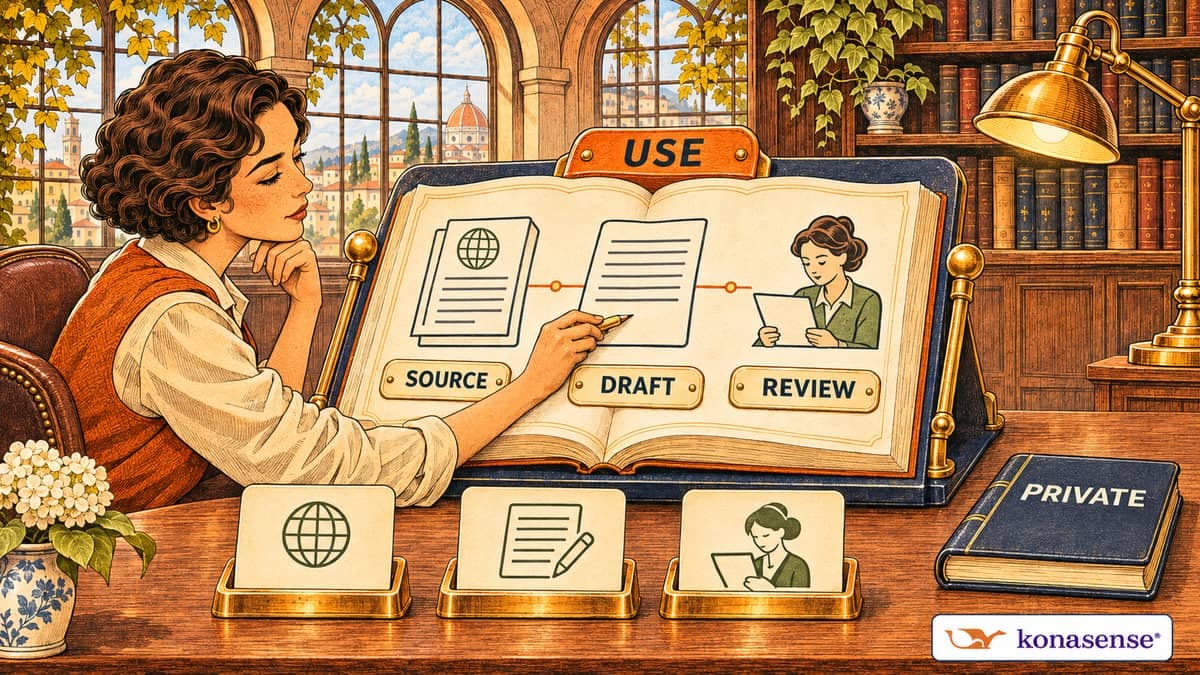
Draft only from the approved public knowledge base, using the designated corporate account. Keep customer-specific information out of this drafting step. Before sending, the employee handling the case checks the answer against its sources, confirms the recipient, and removes any commitment they are not authorized to make. If the answer requires information outside the approved source, pause the AI step and refer the case to the named policy owner through the approved channel.
Give relevant teams this rule and two synthetic requests: one answerable from the public knowledge base, and one that needs private account information. Ask which can proceed, what must be checked, and where the second case should go. Differences in the answers show where the rule, examples, or handoff need clarification. This evaluates the document's usability, not employee misconduct.
For AI governance across Brazil and Latin America, keep the decision structure consistent while having the appropriate local owners validate requirements and wording. A policy copied from another institution cannot establish that the company's own responsibilities have been addressed.
Bring a policy decision your team cannot resolve
Talk with KonaSense about one employee workflow, its data boundary, and where operational controls could support the policy.